
Health Center to fill gap in health care industry
By Kathie Harris, posted Jul 15, 2021 on BizFayetteville.com
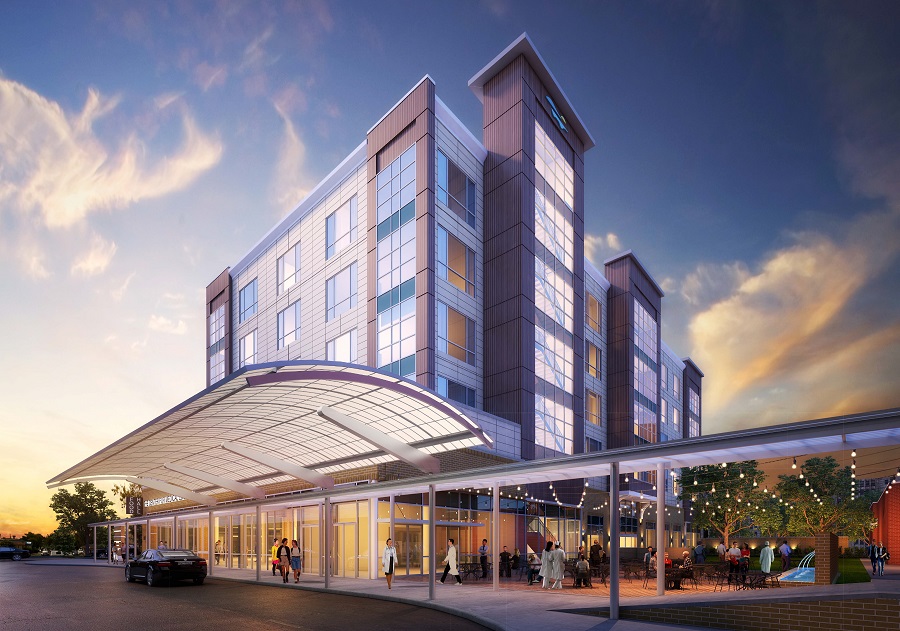
New education center aims to fill provider gaps in Fayetteville’s healthcare industry
Across the nation, an estimated shortage of 100,000 doctors is bumping up against high demands for healthcare access.
Contributing factors include the baby boomer generation of physicians retiring and the expansion of healthcare availability from the Affordable Care Act.
“In North Carolina, specifically, our ratio isn’t in a critical state except for rural hospitals, in primary care especially,” says Dr. Don Maharty, vice president of graduate medical education at Cape Fear Valley Health System.
Maharty says that by 2030, the state is looking at a shortage of 2,000 primary care providers. The most critical needs are in neurology, psychology, pediatrics, obstetrics and gynecology, and general surgery areas.
Fayetteville’s healthcare provider shortage is a micro-view of the state-wide issue. Providers are in short supply everywhere, even in federal facilities such as Womack Army Medical Center and the Fayetteville VA Medical Center.
The VAMC has 58 beds for general medical, surgical and mental health. It serves upwards of 75,000 patients from 19 surrounding counties every year. However, its troubled history of backlogged patients meant solutions like the Veterans Choice Program ask patients to try community doctors instead.
WAMC, housed on Fort Bragg, is for military service members, dependents, and retirees only. There are 200,000 eligible military medical beneficiaries in the surrounding counties, but only 107,000 receive their primary care at WAMC. In Fayetteville, military dependents have the option to go out into the community for their healthcare needs if they want faster service. Both soldiers and dependents use civilian specialty care providers when WAMC lacks the service.
Cape Fear Valley serves several surrounding counties and partners with other local systems to provide care. About 20% of its patients are from the surrounding rural counties. They’re the largest non-governmental employer in Cumberland County, with 7,000 employees operating 60 clinics with a total of 1,000 beds.
All these demands for care mean change is needed.
Local hospital and community leaders had a vision a decade ago to address some of these healthcare issues.
“When you look at our region, the healthcare outcomes are quite low,” says Maharty. “When you overlay the physician shortage, it’s certainly a contributing factor.”
So how do communities and hospitals get doctors to come and stay? Cape Fear Valley imports some physicians from other states or state medical schools, like Duke University, but they don’t remain to practice.
Research showed that nearly half of doctors stayed in the same city where they performed their residency. So, Cape Fear launched its residency program three years ago with a goal of 300 resident physicians in 10 years. The program currently stands at 171 out of 205 approved slots, exceeding expectations. The resident physicians fill nine programs at the hospital, but the practice space doesn’t allow for more.
To solve that problem, Cape Fear Valley will open two new buildings to offer a home for hundreds of new providers within the next 12 months.
Dorothea Dix Unit for Adolescents
The Dorothea Dix Unit for Adolescents is planning to open in December. The Dix adolescent center is a 12,000 square foot state-of-the-art facility that aims to fill a need for psychology and psychiatric services for children aged 12 to 17. Currently, the closest one is 60 miles away, so families will now be able to stay local to support their family members in crisis. Its $4 million price tag is funded by a grant from the North Carolina Department of Health and Human Services.
Thirty-two of the approved residencies are for psychiatry, which is a big help for the area, says Maharty.
Center for Medical Education
The Center for Medical Education opens next July, just in time to attract medical school graduates. The 120,000 square foot education center is expected to create 923 new jobs and will generate an estimated $574 million for the local economy. It’s also adding doctors into the provider-deficient specialties, including psychiatry, general surgery, and OB-GYN. It will also house the Neuroscience Institute, filling in the neurologist gap in the local healthcare industry.
So far, half the post-residency doctors have chosen to make Fayetteville their home. By 2030, Cape Fear Valley hopes to have all 300 resident slots filled.
The average resident physician makes $60,000 to $70,000 a year, which is higher than the median Fayetteville resident income of $45,000. So, the education center’s job creation will impact the housing and retail industry, too.
“When you start a residency program, and you introduce education into a healthcare system, almost everything goes higher,” says Maharty. “Patient quality goes higher because everybody starts practicing evidence-based medicine. Community engagement goes higher. The benevolence in a community goes higher. There’s very little downside to a residency starting in a hospital.”
Copyright © 2026
Enhanced Media Management Inc. dba
Greater Fayetteville Business Journal
This story may be displayed, reformatted and printed for your personal, noncommercial use only and in
accordance with our Terms of Service located at https://bizfayetteville.com/useragreement.