
Medical school students earn prestigious NC Albert Schweitzer Fellowship
By Staff Report, posted Apr 15, 2026 on BizFayetteville.com
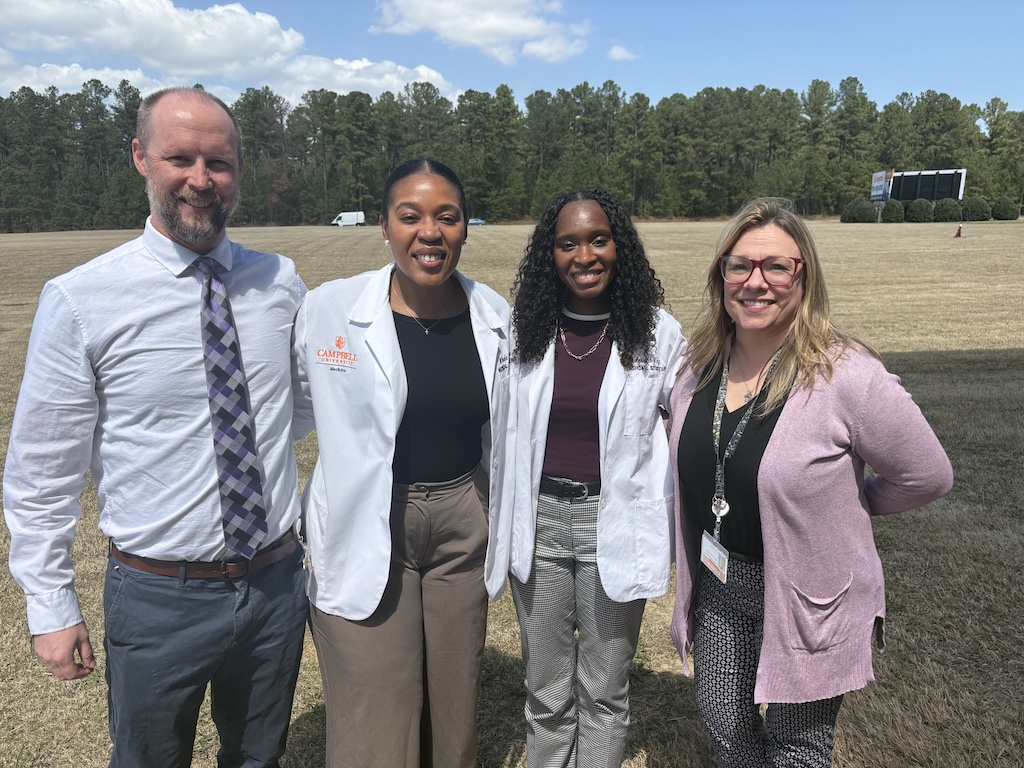
Two students from the Campbell University medical school are recipients of the prestigious NC Albert Schweitzer Fellowship and will work to fill a critical need for families in Harnett County.
The recipients, Michaela Brown and Jessica King, are second-year students in the Jerry M. Wallace School of Osteopathic Medicine (CUSOM). They are developing a plan to offer prenatal classes in partnership with the Harnett County Health Department, working there with Public Health Director Ainsley Johnson and nurse practitioner Melissa McLamb.
Brown and King are the first-ever CUSOM recipients of the Schweitzer Fellowship.
Founded in 1994, the NC Albert Schweitzer Fellowship is one of 13 currently active Schweitzer program sites across the U.S. dedicated to developing a pipeline of emerging professionals who enter the workforce with the skills and commitment necessary to address unmet health needs, the organization website says.
In October 2023, Betsy Johnson Hospital in Dunn stopped providing labor and delivery services. It was the lone hospital in Harnett County to provide the services, with providers now opting to send patients to Fayetteville or to hospitals in Wake County or Durham, for example, requiring long drives for women to give birth.
“We decided that it would be a good idea to form some kind of project that would assess the needs of the low-income population and the pregnant population here in Harnett County,” King said in a press release.
The Harnett County Health Department offers prenatal health services, but many pregnant patients don’t use the resources offered, King explained.
She and Brown had an idea to help. The free, incentivized prenatal classes from the students are designed to inform pregnant patients — and the public in general — about the importance of prenatal care, clarify courses of action in medical emergencies and offer evidence-based practices to promote healthy pregnancies and healthy babies.
“Our goal is to bring in more patients to the prenatal clinic, to help patients get earlier care,” King shared in a press release. “Because there’s not a labor and delivery unit here, a lot of patients aren’t coming to get care early on, in their first trimester. We’re gonna help encourage pregnant patients to get care earlier, and give them resources about what’s available here.”
Brown agrees. She says myriad factors led them toward starting the project, including racial disparities in maternal mortality.
“We’ve known for a while that black women are more likely to die during childbirth due to preventable factors that are not intrinsic to their race, including racism. And these adverse health outcomes have been exacerbated by these conditions … where we have rural hospital closures, rural labor unit closures and lack of provider access; a lack of general resources,” Brown added in a press release.
A team of advisers and mentors, from throughout Campbell, will help guide them throughout the project.
Brown said being surrounded by a group of people who can brainstorm and work toward a goal is a distinct privilege and gives her professional advantage as she works toward becoming a practicing physician.
“We don’t have all the skills yet to practice medicine on our own, but there is absolutely something that you can do, even along the way. Hopefully, this is not just an encouragement for us … but more importantly an encouragement for the patients and the women that we get a chance to impact, because this is likely not the only challenge they face in their lives.”
An issue, too, is making people aware of the prenatal classes, which is important for expectant families and available from the Health Department. The idea of “community” is a major focus toward visibility.
“They wanted more community amongst other mothers, other first-time parents, and so this is definitely going to provide that avenue, as well,” shared Brown in a press release, referring to the Health Department.
Brown and King want to increase awareness about the problems and to turn their attention toward patients looking for answers, in this case about prenatal care.
People in Harnett, King says, may feel as if they don’t have the access or the means for prenatal care.
“I’m very interested in doing maternal health, and I know (Brown) and I, as Black women … that’s a prominent demographic in rural communities,” shared King in a press release. “This is a nationwide thing, where hospitals are shutting down in rural communities, and they’re not having anywhere to go to deliver their children.”
Copyright © 2026
Enhanced Media Management Inc. dba
Greater Fayetteville Business Journal
This story may be displayed, reformatted and printed for your personal, noncommercial use only and in
accordance with our Terms of Service located at https://bizfayetteville.com/useragreement.