North Carolina’s connection to the water runs deep. From commercial ports and military installations to boatbuilders, marine manufacturers, ship repair operations, and an extensive network of suppliers, maritime activity is an important part of the state’s economy.
According to the National Oceanic and Atmospheric Administration’s Marine Economy Report, North Carolina’s marine economy includes more than 3,400 businesses and nearly 51,000 employees, generating approximately $1.3 billion in wages and $4 billion in gross domestic product.
North Carolina’s ports have an even broader economic reach. Activities associated with the Ports of Wilmington and Morehead City support more than 88,000 jobs statewide, demonstrating that maritime activity extends well beyond the coastline and into manufacturing, transportation, logistics, construction, professional services, and supply chains throughout the state.
Yet continued growth depends on one critical resource: people with the skills to do the work. Organizations such as the North Carolina Military Business Center help connect companies with federal and defense maritime opportunities while working with industry, education, workforce, and economic-development partners to identify the capabilities and skills needed to support those opportunities.
Maritime Careers Go Far Beyond the Water.
Modern vessels, ports, shipyards, and maritime systems depend on welders, machinists, electricians, engineers, marine mechanics, composite technicians, electronics specialists, quality inspectors, logistics professionals, project managers, cybersecurity specialists, and skilled production workers.
The industry also needs people who understand robotics, autonomous systems, artificial intelligence, sensors, communications technologies, advanced materials, and digital manufacturing.
Together, these entities represent an industry that needs people who can design, build, repair, operate, move, inspect, program, and sustain complex systems.
There Is More Than One Path to a Maritime Career.
One of the most important messages for students, parents, job seekers, and career changers is that there is no single pathway into the maritime industry.
Some careers require four-year or advanced degrees, particularly in engineering, naval architecture, technology, and management.
Others can begin through community college programs, apprenticeships, industry certifications, military experience, technical education, or on-the-job training.
North Carolina’s community colleges are helping create those pathways. Carteret Community College in Morehead City, for example, offers programs in boat manufacturing and service, marine propulsion systems, and maritime training. Similar technical programs throughout the North Carolina Community College System can help students develop skills that are transferable not only to maritime employers, but also to aerospace, defense, advanced manufacturing, transportation, and other industries.
A Workforce Important to National Security.
North Carolina’s maritime workforce also plays a vital role in national defense. The United States depends on a strong maritime industrial base to build, maintain, repair, and sustain military vessels and supporting systems. That requires a national network of shipyards, manufacturers, suppliers, engineering firms, technology companies, and skilled workers.
North Carolina businesses have opportunities to participate throughout that supply chain. That connection is increasingly important because winning a contract is only part of the equation. Businesses must also have the workforce capacity to perform the work.
As more North Carolina companies pursue opportunities in shipbuilding, ship repair, vessel maintenance, advanced manufacturing, maritime technology, and the defense industrial base, developing a reliable pipeline of skilled workers will be essential.
Workforce development begins with awareness.
Individuals cannot pursue careers they do not know exist.
That means employers, schools, community colleges, workforce organizations, and industry partners must help young people see what modern maritime careers actually look like.
Facility tours, internships, apprenticeships, career fairs, work-based learning, industry certifications, and direct interaction with employers can expose students to career possibilities they may never have considered.
The Opportunity Is Here.
North Carolina already possesses many of the ingredients needed for a strong maritime economy: ports, military missions, manufacturers, boatbuilders, educational institutions, technology companies, suppliers, and generations of maritime expertise.
The next challenge is ensuring that there are enough skilled people to support them.
That will require continued cooperation among industry, education, government, workforce organizations, and communities throughout the state.
It will also require showing more North Carolinians that maritime careers are not limited to jobs aboard ships or along the coast.
North Carolina’s maritime future will ultimately depend on the people who build it.
And for the next generation of workers looking for careers that combine technical skill, innovation, economic opportunity, and service to something larger than themselves, maritime may be a path worth exploring.
For more information on the NC Military Business Center visit www.ncmbc.us or contact Erin at erin@ncmbc.us.





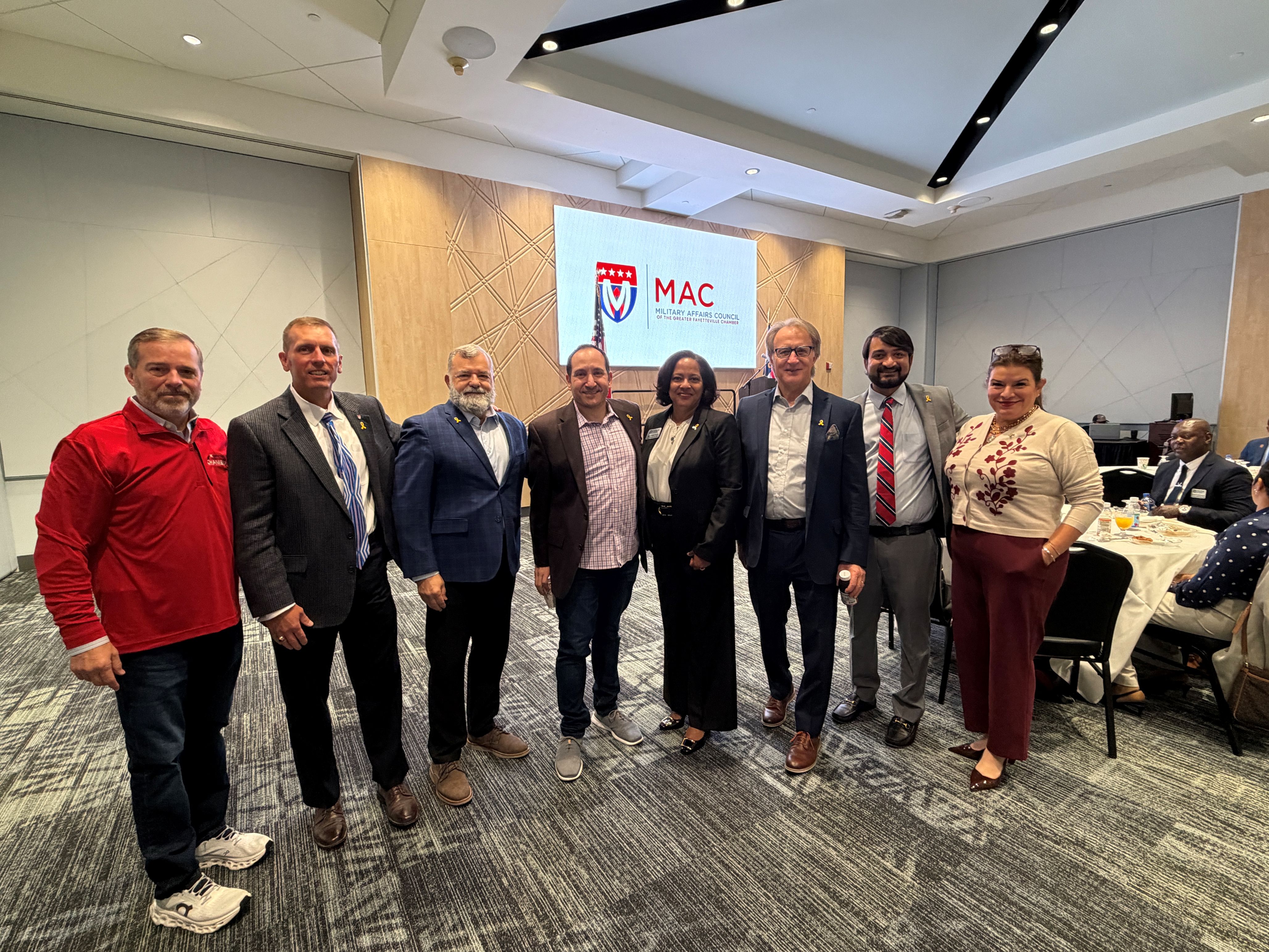
The Military Affairs Council currently has around 170 members and is always looking to grow and recruit additional members. Photo provided by The MAC.A mainstay institution that helps connect Fort Bragg to the greater Fayetteville area continues to c