

This summer, North Carolina will pilot a first-of-its kind course to train and certify technicians in the installation and maintenance of Electric Vehicle (EV) charging stations.
The Electric Vehicle Supply Equipment (EVSE) Field Technician Certification program will be piloted at Wake Tech Community College with support from the North Carolina Business Committee for Education (NCBCE) and the Siemens Foundation's EVeryone Charging Forward ™ Initiative. The course was developed through a sectoral partnership led by NCBCE which convened employers in the industry with education and workforce partners to identify skills, competencies, and training that industry needs to support new jobs in EV charging infrastructure.
“From solar deployment to electric vehicle and battery manufacturing, North Carolina is leading the way in the transition to a clean energy economy,” Governor Roy Cooper said in a press release. “This new course will help our students prepare for careers in clean transportation, a critical aspect of the clean energy workforce that we will need in the future.”
NCBCE was selected as an inaugural partner in EVeryone Charging Forward, which was created in response to the rapid growth of the EV charging sector and the significant demand for skilled workers across the industry. This workforce development initiative allows industry to help shape education through curriculum development. The program also seeks to ensure equitable access to jobs for individuals from all backgrounds by providing support to fund scholarships and wraparound services for students facing barriers to participation.
“North Carolina is clearly among the nation’s leaders in the transition to electrified transportation, so NCBCE was a natural fit when we launched EVeryone Charging Forward ,” said David Etzwiler, CEO of Siemens Foundation in a press release. “This pilot represents the next step in our partnership as we advance an equitable and accessible workforce in the EV charging sector.”
The EVSE Field Technician Certification course will be offered June 10 – July 23, with five weeks of online instruction and one week of hands-on instruction. The 110-hour course will combine instruction in electrical systems and electric vehicles, including codes, standards, and regulations; electrical energy fundamentals; electric vehicles and batteries; charging stations; commissioning; and maintenance. Students will learn electrical safety, charging station configuration and specification, communication systems, site inspection, troubleshooting, and repair. Students who successfully complete the course will receive a Wake Tech certificate and be prepared to sit for EVSE Technician credentialing through the Society of Automotive Engineers.
The pilot course is at capacity with a waiting list. Interested students can submit their contact information on the waiting list to get information on upcoming EVSE Technician classes at Wake Tech. The course will also be delivered at other community colleges in the state in the future.
Public demand for cleaner and more efficient electric vehicles is evidenced by rapidly growing demand nationally, and in North Carolina that need is outpacing initial expectations. As of February 2024, more than 88,000 ZEVs are registered in North Carolina. Thousands of electric vehicle chargers have already been installed across the state, with installations increasing daily as public and private partners respond to this rapidly growing demand.





Yes, those are decorations currently in my home. Yes, I may have spent more money than average for two oversized mums that are taking up way too much space on my porch, and yes, I may have stood my ground in a Lowe’s hardware store arguing with my hu
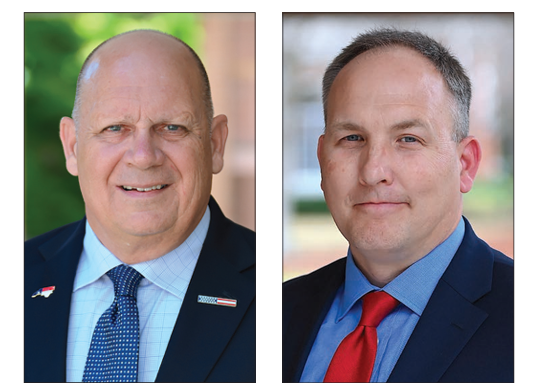
On Oct. 1, Jimmy Hendrix (right) officially assumed the role of executive director at the North Carolina Military Business Center. Scott Dorney (left) will remain involved with the organization for a brief period to provide support during the transit
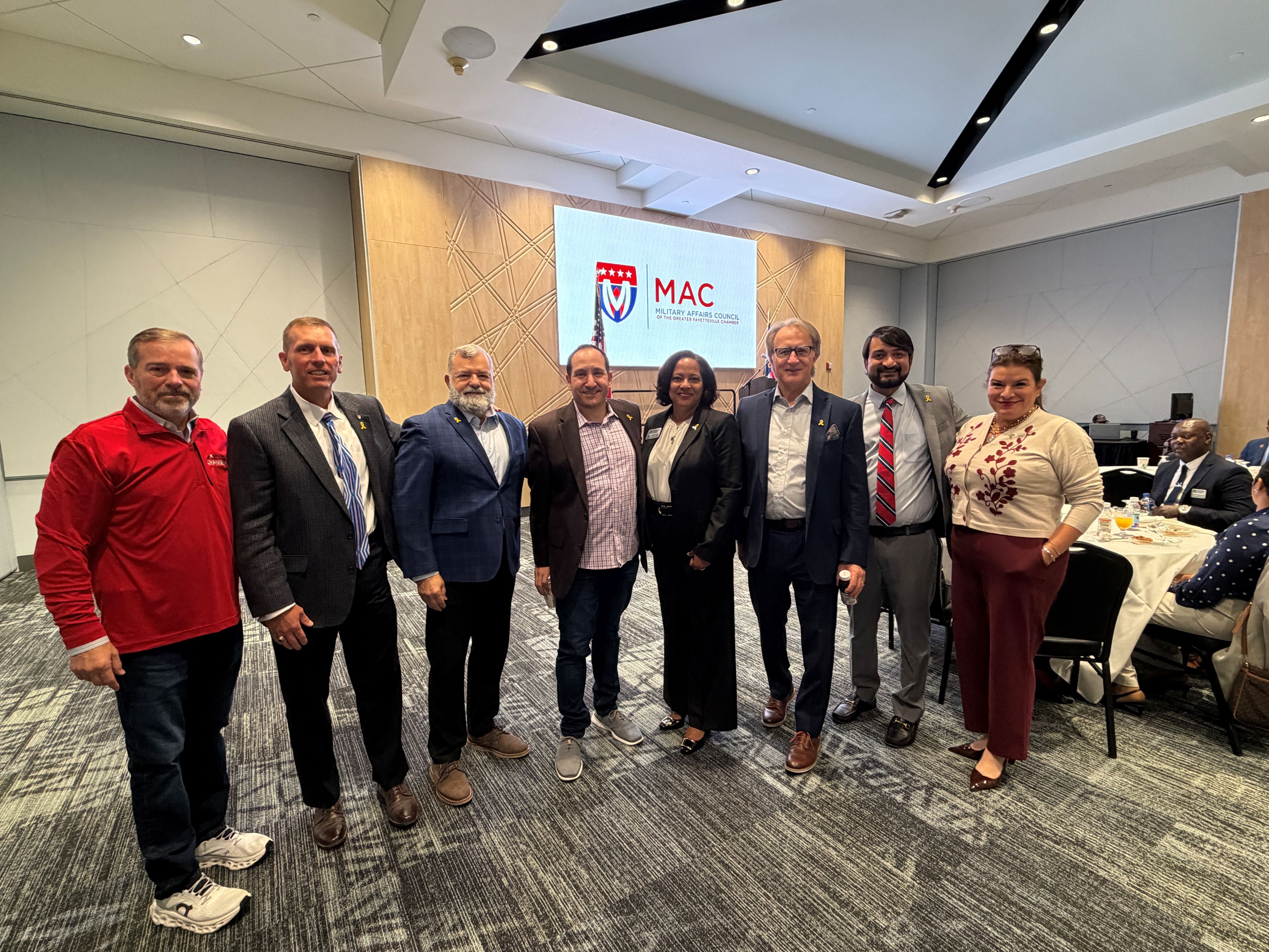
The Military Affairs Council currently has around 170 members and is always looking to grow and recruit additional members. Photo provided by The MAC.A mainstay institution that helps connect Fort Bragg to the greater Fayetteville area continues to c