
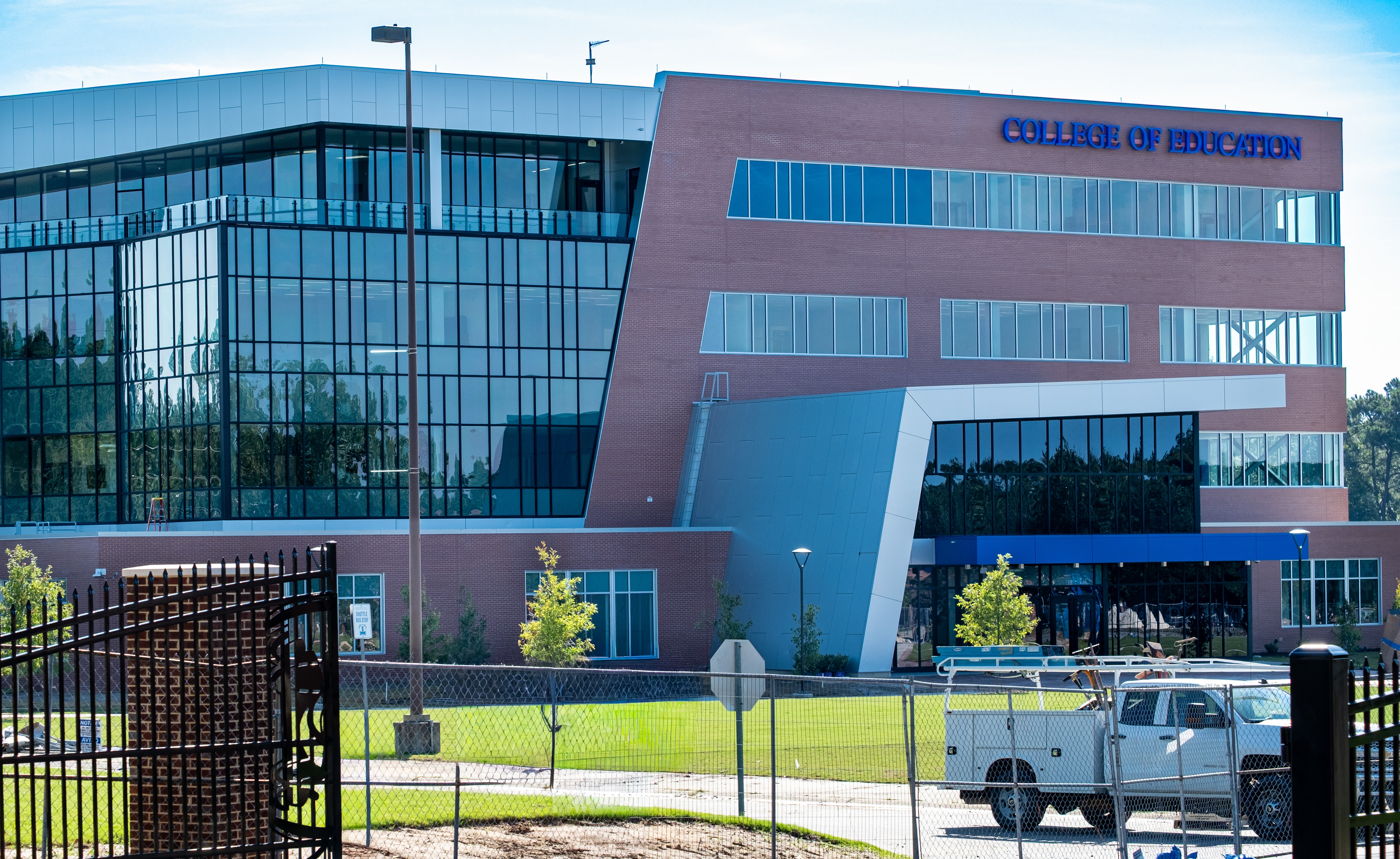
University historians say the new Fayetteville State University College of Education building marks a new chapter in the university’s legacy as a pioneer in shaping a long lineage of educators.
The university hosted the ribbon-cutting ceremony for its new College of Education building on Aug. 20, celebrating almost 150 years of tradition in developing the region’s educator workforce.
The building cost $69.3 million and encompasses a total of 72,027 square feet. The facility’s four stories feature a blend of classrooms, conference rooms and faculty offices, resulting in over 30 dedicated learning and collaboration spaces and more than 60 private office spaces in the new building.
“The new facility at our university is a testament to our commitment to high-quality educator preparation programs. It provides a vital resource for supporting students in today’s technology-driven world, featuring modern classrooms and cutting-edge facilities. Furthermore, the College of Education building is home to our FSU Reading Clinic, which offers tutoring services for children in the local community. This clinic plays a significant role in shaping future educators, as education students collaborate with faculty to provide valuable reading tutoring as part of their training,” shared Dr. Danielle Nesbitt, interim associate dean and associate professor at the College of Education.
The new building is going to help continue the university’s rich tradition as a regional powerhouse in developing the workforce of the future, officials say. The university was founded in 1867 and is the second oldest public university in North Carolina.
“Our school was primarily a teaching school,” said Nicholle Young St. Leone, an archives technician and African American studies researcher at FSU.
In 1877, the school was selected by the state to be established and chartered as a public institution supported by the state for the instruction of African Americans.
“It was basically another way of saying it’s a teachers’ college,” she noted.
From there, into the 1900s, the university started venturing into other programming, like technical education that includes textile work and agriculture training.
“But still, we never lost the identity of being primarily about teaching African Americans to be teachers,” Young St. Leone said.
The university experienced significant booms after World War I and II, seeing U.S. Military members return to their homes looking for opportunities outside of their military service. Young St. Leone reflected on the legacy of Henry Wordsworth Ferguson, a local Veteran of World War II.
“He actually said, ‘My aim is now to return to Fayetteville State Teachers College and become a teacher. It’s what I intend to do,’” Young St. Leone shared. “And so you have this wonderful history of determined African Americans wanting to become teachers and essentially help with building communities within North Carolina, but also extending outwards into other states and other spaces.”
The reach and the legacy of FSU as a prestigious institution that develops teachers is astounding, Young St. Leone said.
“It is really incredible. We’ve had teachers form alumni associations as far away as New York City,” she added.
In the 1990s, the College of Education took the next step forward in its evolution. In 1994, the university established its doctoral degree in educational leadership, eventually awarding its first degrees to the first program cohort in 1997.
“That has carried all the way into the present day,” Young St. Leone said. “Since then we’ve had multiple graduates, and so it’s very exciting to see us not only extend to essentially doctoral programs, but also looking into other important parts of education.”
Some of those frontiers include different aspects of special education.
“We really want to create new leaders and innovations in that field,” Young St. Leone said. “The building itself is essentially the backbone of the university. It’s really great to see that we are coming back to that and acknowledging that historically with this brand new building as part of the many renovations and programs that are being developed here at FSU.”
For teachers of all types of practice, the new building will continue to amplify programs offered at FSU. The university already partners with schools around Cumberland County to offer real-world experience for aspiring teachers.
“The development of a new College of Education building has long been an aspiration for our faculty and staff. The realization of this project is not only thrilling but also underscores FSU’s commitment to advancing educational excellence and meeting community needs. This state-of-the-art facility is poised to enhance our educational offerings and attract a broader pool of prospective students,” added Dr. Nesbitt.
The long-lasting legacy of FSU into the future will be its innovation and commitment to producing the best teachers, she noted.
“It’s really exciting to know that, on top of just being able to have this as its own separate building, you have all these specialties that are being able to be reinforced within it,” Young St. Leone said. “While you’re in there, you’re actually also learning while you’re kind of waiting for your classes, or you’re kind of just enjoying being in that building. There are going to be vari ous wonderful designs and informa tion being shown digitally, but also within the design of the building to really reinforce that you are a part of a very proud legacy as you come to school here at Fayetteville State University.”







Join us Sept. 29 for our third Power Breakfast of 2026 as business leaders share how they leverage decades of institutional wisdom. The Greater Fayetteville Business Journal invites you to join us for our third quarterly Power Breakfast, The Fam
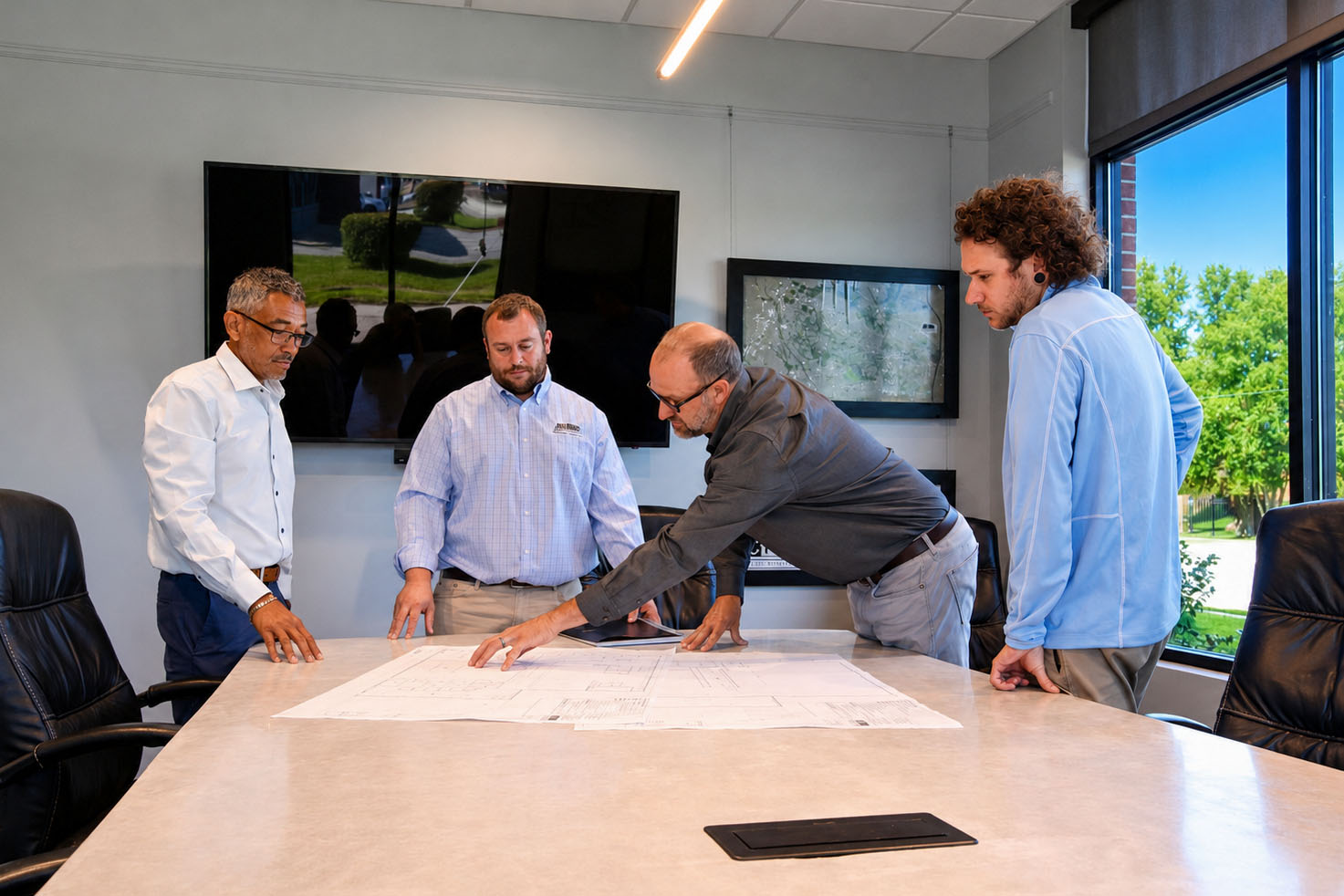
Skyeton leadership have decided to look locally for a general contractor to head up major renovations for the 28,479-square-foot building they’ve selected as their new home. Fayetteville-based Critical Path Solutions LLC has been chosen as the primary contractor for bringing new life to the previous Black+Decker plant site.

From left to right: US Secretary of Energy Chris Wright with Antares Co-founder and CEO Jordan Bramble. Photos courtesy of Antares Nuclear, Inc. Antares Nuclear, Inc. recently announced that it has been awarded an Other Transactions Authority ag