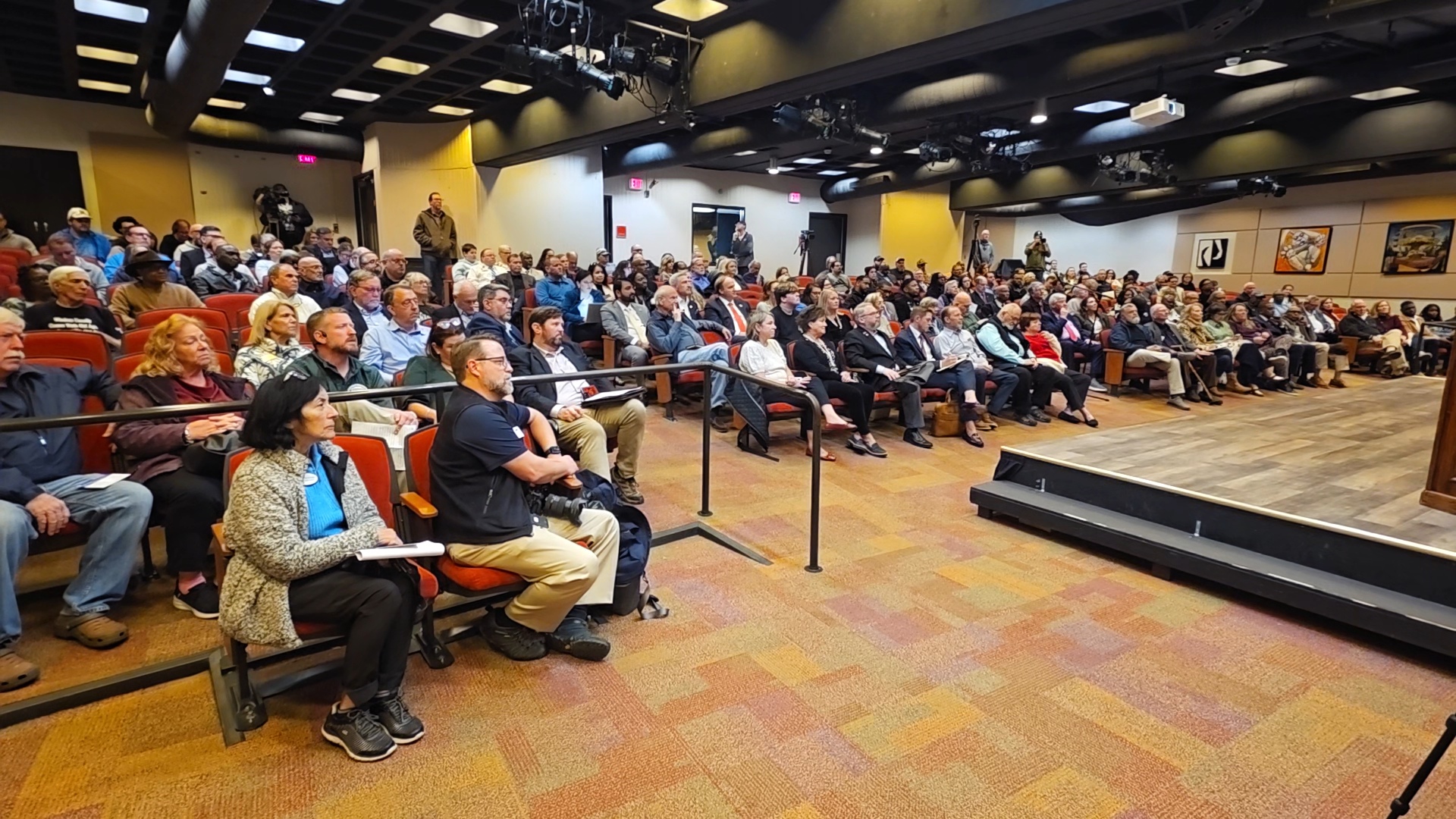
The Fayetteville community gathered on the Fayetteville Technical Community College (FTCC) campus on Thursday, Dec. 4, to fight for their water source.
The NC Department of Environmental Quality kicked off the first of three public hearings scheduled in some of the communities that would be impacted by a recently filed request from the Town of Fuquay-Varina for an Interbasin Transfer (IBT) permit. The hearings were to hear public comment on the draft environmental impact statement (EIS) for the Interbasin Transfer Certificate (ITC) request.
The request, if granted, will significantly impact the Cape Fear River Basin and the communities who depend on it.
The community packed out the Cumberland Hall Auditorium at 6 p.m. to hear more about the proposal and provide feedback, responding to the proposal with a resounding ‘no.’
A total of 49 residents, government leaders, infrastructure experts, business owners and more from Cumberland County and beyond all signed up to speak in opposition to the request, stating that the proposal was detrimental to residents, economic development, water access in times of drought and could lead to negative environmental impacts.
Each speaker was given two minutes to voice their opinions with one resident stating the request was comparable to a James Bond villain.
Other residents and organizational leaders however, brought data and statistics to the table, urging the request to be denied.
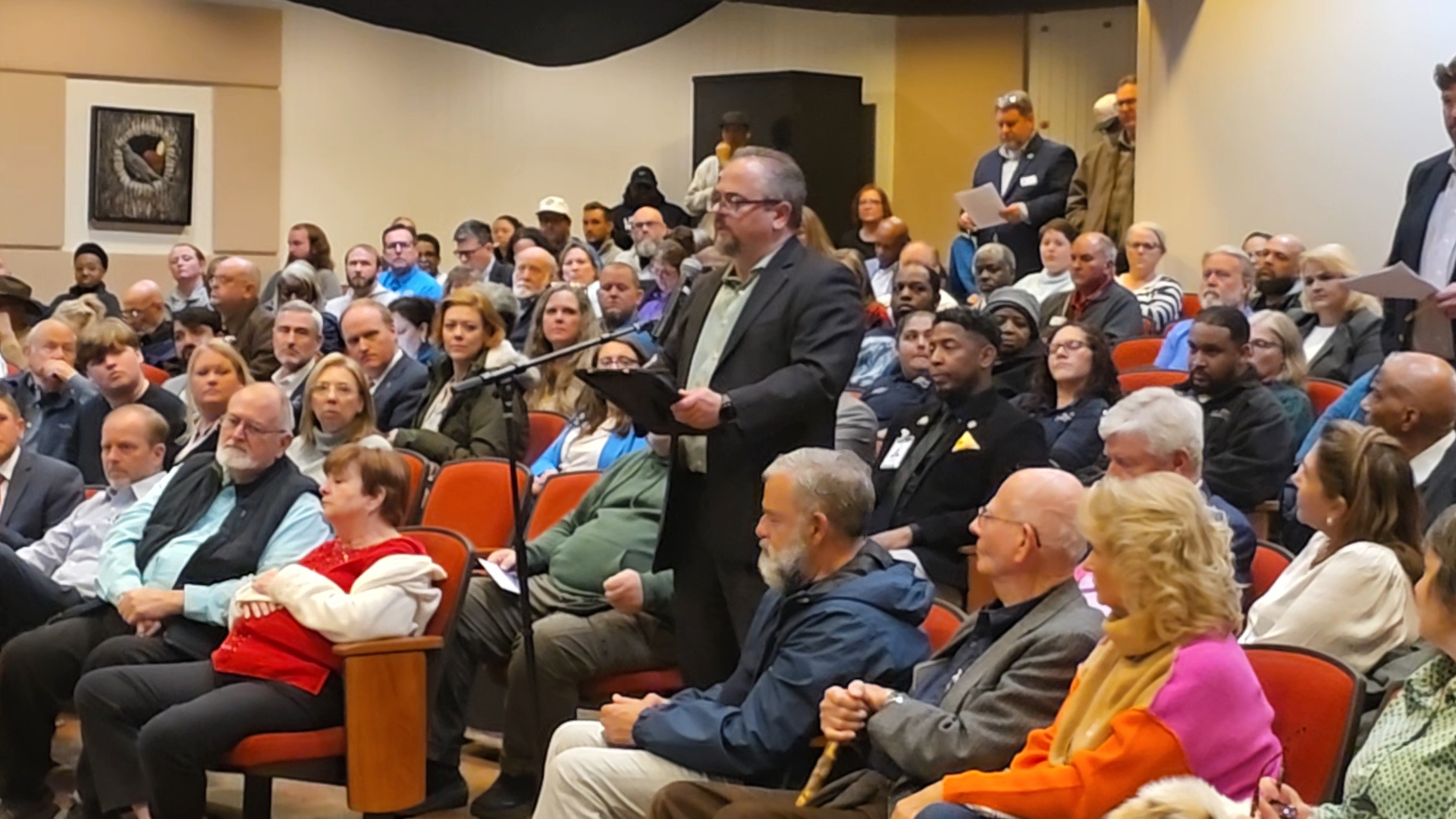
“We recognize that to compete for the jobs of tomorrow, a community must have the talent, real estate, resources and infrastructure required. With 7,000 highly skilled soldiers transitioning to Fort Bragg each year, a new medical school, award winning workforce development initiatives, one of the state’s identified mega sites, recently [opened] I- 295, substantial investments in infrastructure from Piedmont Natural Gas, Duke Energy, South River Electric and Fayetteville PWC, we are doing the work,” shared Robert Van Geons, president and CEO of Fayetteville Cumberland County Economic Development Corporation. “Early returns have led to the announcement over $1.5 million in new investment and nearly 5,000 jobs in just the last few years. Currently, we are in active competition for projects representing more than $40 billion in potential investment and more than 15,000 jobs. Removing the requested amount of water from the Cape Fear River unfairly jeopardizes our ability to compete for these projects and will dramatically limit future opportunities.”
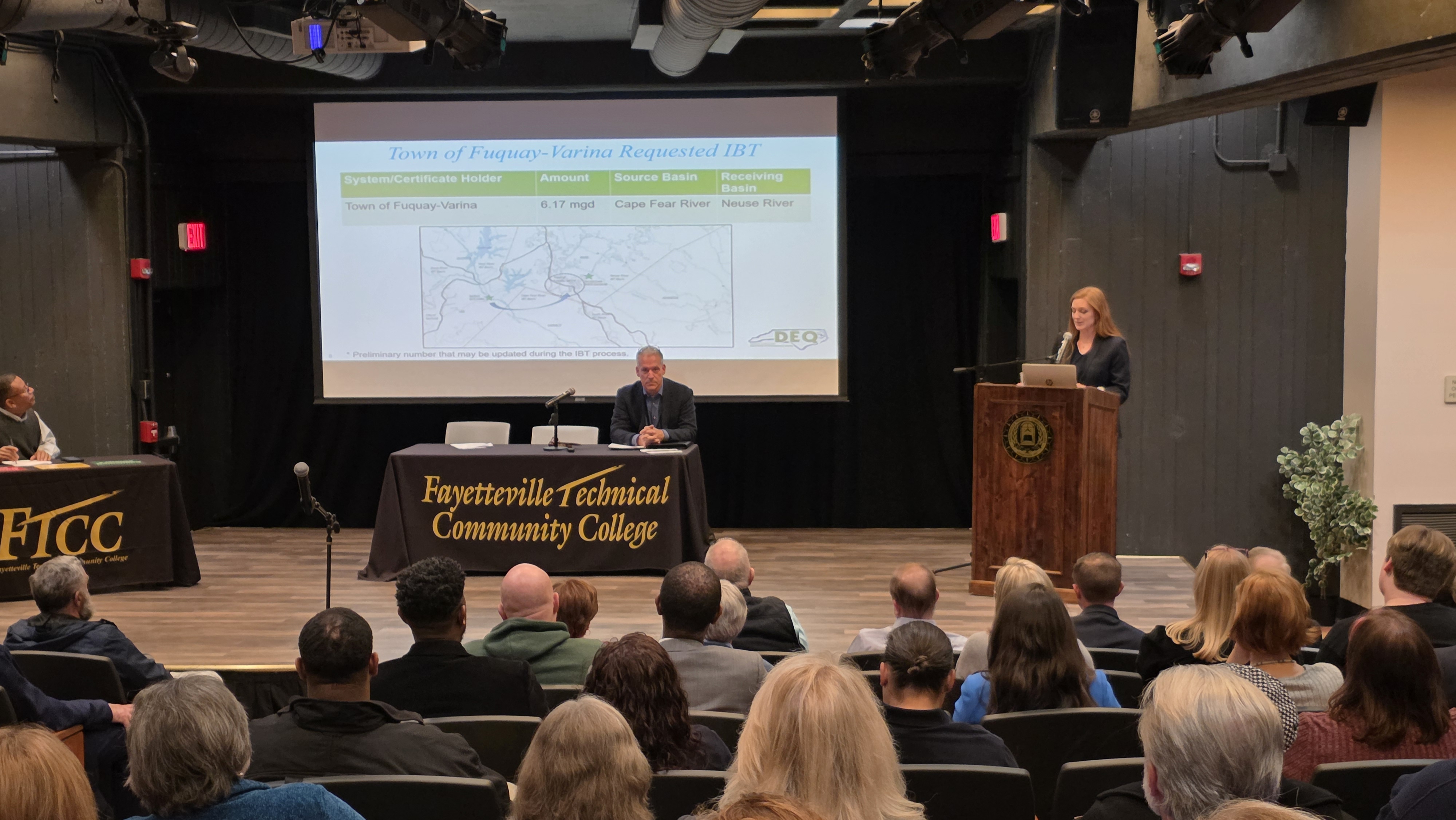
At the beginning of the hearing, Maya Holcomb with the Division of Water Resources spoke on behalf of the Town of Fuquay-Varina to break down the specifics of the permit.
The Town of Fuquay-Varina, which is located in the Cape Fear and Neuse River basins, is seeking approval for an ITC in order to source water supply from the Cape Fear River Basin to meet projected future water demands.
Currently, the town relies on wholesale water purchased from neighboring water systems – the City of Raleigh and Johnston County, which are in the Neuse River Basin, and from Harnett County, which is in the Cape Fear River Basin. However, the town’s current contracted water supply is projected to fall short of future demands, with a shortfall projected by 2030.
The town’s preferred alternative to resolve its projected shortfalls is to source water supply from the Tri-Rivers (i.e., City of Sanford) Water Treatment Plant in the Cape Fear River Basin. This alternative requires an IBT Certificate. The town is seeking approval to transfer 6.17 million gallons per day from the Cape Fear River basin to the Neuse River Basin based on 2055 demand projections.
The Fayetteville Public Works Commission (PWC) inspired the community to get involved with the launch of the “Don’t Drain Our Future” campaign, which highlights the detrimental effects that an approval of this request would have on five North Carolina counties.
They shared that this type of transfer, which involves moving water from one river basin to another, could affect nearly one million residents and a large number of businesses across five North Carolina counties, including the 250,000 residents served by PWC.
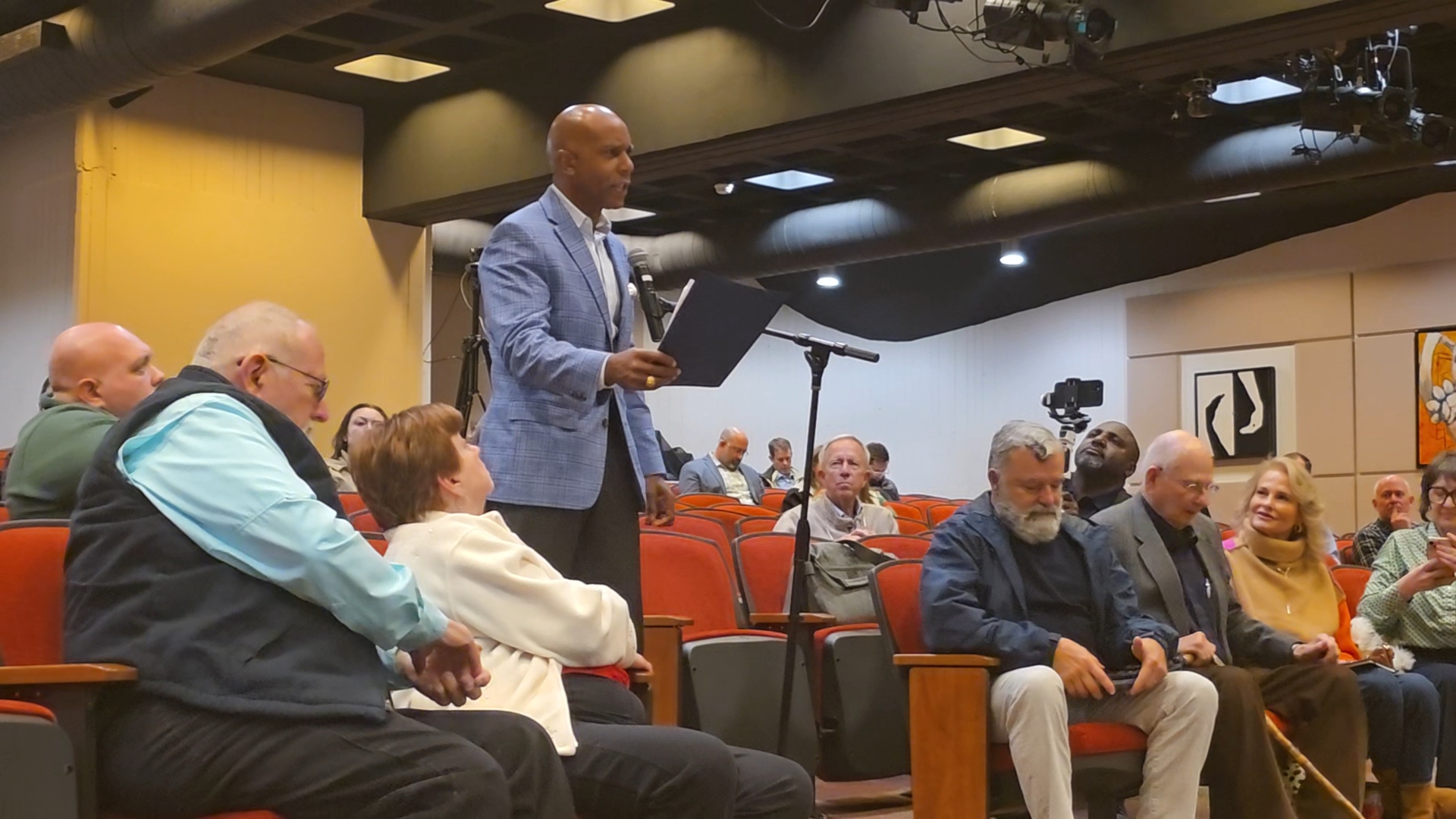
Tim Bryant, CEO and general manager of Fayetteville PWC, also spoke in opposition to the proposal at the hearing stating in part:
“We all rely on the Cape Fear River to be our primary source of water. PWC and its customers should not bear the cost of Fuquay-Varina's failure to plan. Such a loss of flow means higher operational costs to PWC and our customers as we ensure safety as well as could result in conservation management being placed upon our customers on day one,” shared Bryant. “No one is arguing that Fuquay-Varina should not have the ability to grow and flourish as a community. But we are saying that that development should not come at the expense of us, and over a million people downstream of us, who will be adversely impacted. Simply put: all the water taken out of Cape Fear River must be returned to the Cape Fear River basin. PWC respectfully, but firmly, urges the Environmental Management Commission to deny this IBT Certificate request.”
The draft EIS should include a comprehensive analysis of the environmental impacts that would occur in the source and receiving basins if the petition for a certificate is granted. The draft is available online on DEQ’s website, and via the North Carolina Department of Administration Environmental Review Clearinghouse.
Two other public hearings have been scheduled for Dec. 9 in Raleigh and Dec. 11 in Pittsboro.
The public is invited to attend the public hearings to provide relevant written and verbal comments on the draft EIS document connected to the requested IBT certificate.
In addition to accepting comments at the hearings, the public is encouraged to submit written comments by mail to Maya Holcomb, Division of Water Resources at 512 N. Salisbury St., Raleigh, N.C., 27604, or by email to maya.holcomb@deq.nc.gov. Comments must be postmarked or emailed by April 1, 2026.





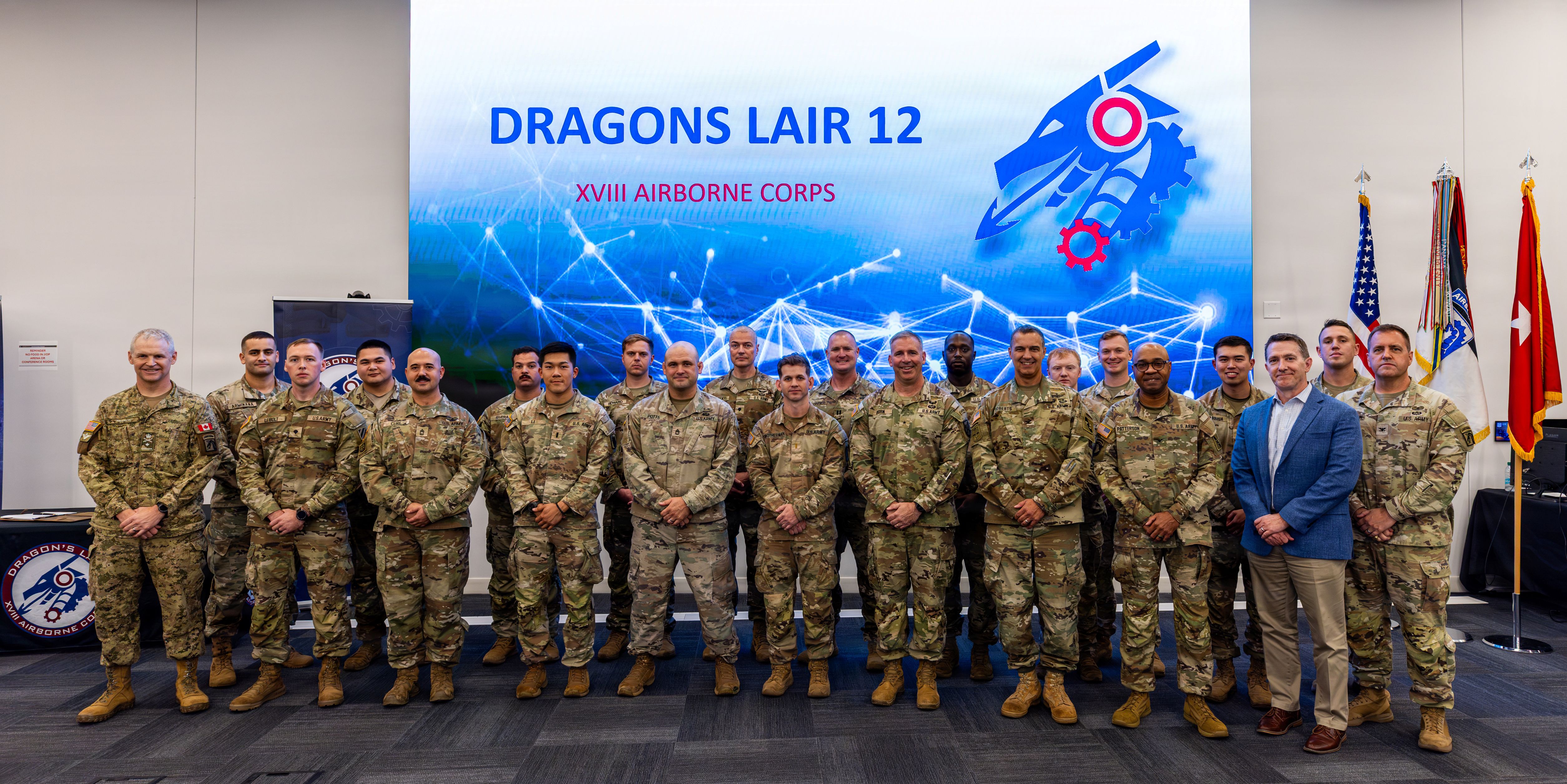
U.S. Army soldiers gather for a group photo after the conclusion of Dragon’s Lair 12 at the Lieutenant General Gavin Joint Innovation Outpost on Fort Bragg, North Carolina. The Dragon’s Lair 12 event offered soldiers a platform to pitch their ideas d
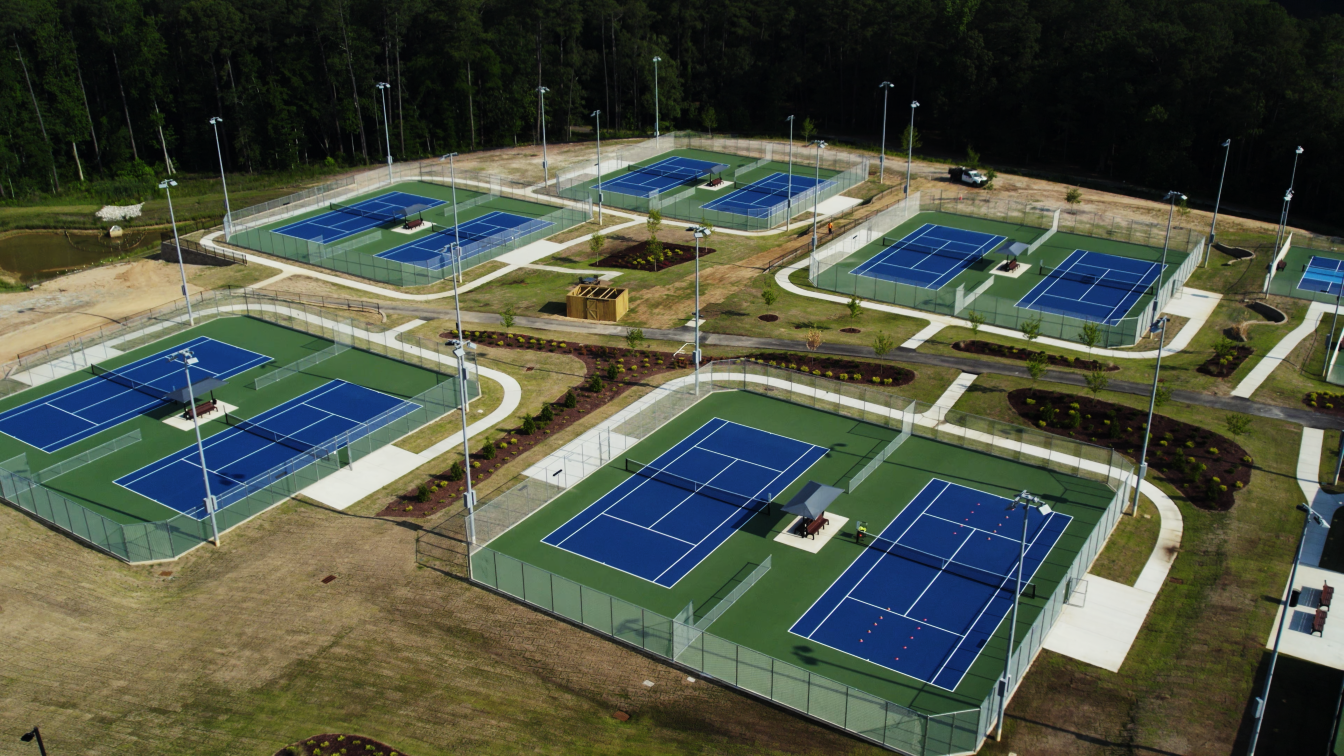
Photo by Brooks HoffmanThe Fayetteville Area Convention & Visitors Bureau (FACVB) is pleased to announce that the destination has been selected to co-host the Singles State Championships for USTA North Carolina, Oct. 1-4, 2026. Eight tennis

Fayetteville State University is set to embark on what university leaders hope will lead to a new tradition for the regional business community in Cumberland County and beyond. The university will host its inaugural Entrepreneurial Impact Awards Gala