
The Office of Management and Budget (OMB) Memorandum M-25-22, “Driving Efficient Acquisition of Artificial Intelligence in Government,” has introduced a powerful, non-negotiable compliance requirement into the federal acquisition lifecycle. For the defense and technology contractors of North Carolina, the document serves as an immediate, high-stakes warning: the casual use of public Generative AI models for business development (BD) and proposal drafting must cease, as it introduces a compliance failure risk that could disqualify bids or terminate contracts.
This risk is not theoretical. It stems directly from the clash between commercial AI's business model and the government's mandate to protect its data.
Section I: The Contract-Killing Clash of Data Ownership
The most potent guardrail in M-25-22 is the prohibition on unauthorized data use, a provision aimed at preventing the government's intellectual assets from being exploited by third-party vendors.
The Explicit Prohibition: M-25-22 dictates that future federal contracts must include terms that prohibit vendors from using non-public government data to train or develop publicly or commercially available AI algorithms without explicit, written consent.
The Front-Loaded Risk for Proposal Teams: While this rule is enforced during contract performance, the risk begins the moment a contractor’s BD team starts drafting a proposal.
When utilizing popular, commercial Large Language Models (LLMs) to analyze requirements, summarize documents, or generate draft text, contractors often input sensitive, non-public information. This includes:
Proprietary Bid Data: Detailed cost structures, unique technical methodologies, and competitive intelligence that is never intended for public view.
Restricted Procurement Materials: Specific, non-public requirements, scope details, or agency-internal documentation sourced from draft Requests for Proposals (RFPs) or restricted industry days.
If the public AI model's terms of service allow it to retain and use that input for model performance tuning or future training, which is often the case by default, the contractor has potentially violated the core data training guardrail before the contract is even awarded. This failure to secure government-adjacent information constitutes an unacceptable risk in the eyes of the procurement official, providing grounds for bid rejection or immediate contract termination.
Section II: The Erosion of Intellectual Property and Trust
The M-25-22 guardrails are here to stay. Contractors who fail to master them are actively jeopardizing their ability to compete in the future of federal AI procurement.
For more information on the North Carolina Military Business Center visit https://www.ncmbc.us/ or contact Reena Bhatia at reena@ncmbc.us.
The North Carolina Military Business Center (NCMBC) is a statewide business development and technology transition entity dedicated to leveraging military and other federal business opportunities to expand the economy, grow jobs, and improve the quality of life in North Carolina.





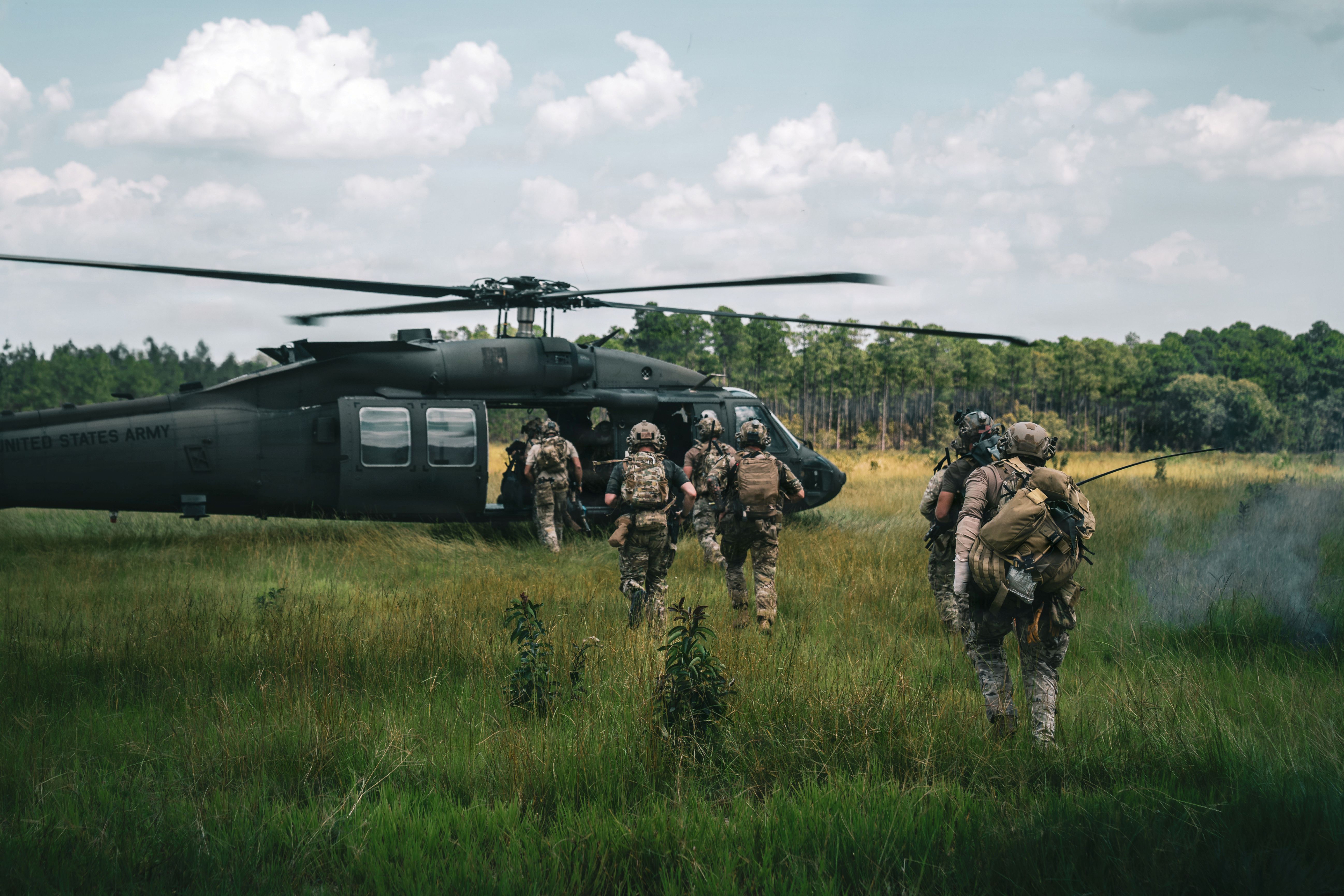
The US Army Special Forces (SF), known as Green Berets because they are awarded a green beret to wear following the rigorous selection and training process, are specialized military units trained to conduct special operations. Photo provided by the G

Fuel to Serve will go “beyond the dining hall,” using food and shared meals as trusted entry points to link families with a broader network of resources. Photo courtesy of USAA.USAA and the Robert Irvine Foundation recently announced Fuel to Serve. T

Yes, those are decorations currently in my home. Yes, I may have spent more money than average for two oversized mums that are taking up way too much space on my porch, and yes, I may have stood my ground in a Lowe’s hardware store arguing with my hu