
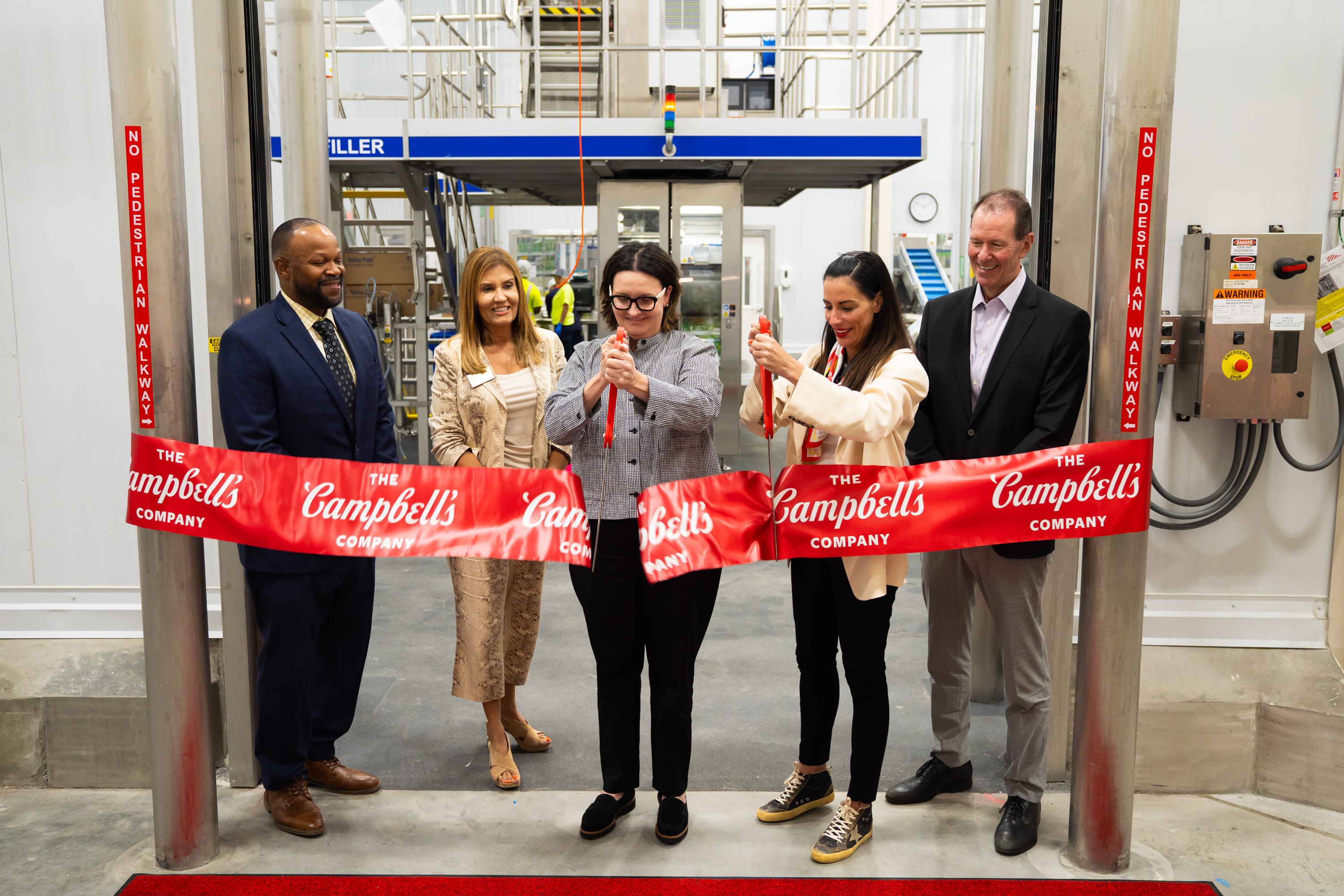
The Campbell’s Company (NASDAQ:CPB) celebrated the expansion of its aseptic manufacturing facility in Maxton, N.C., on June 11 with a ribbon cutting ceremony highlighting the company’s significant investment in advanced manufacturing, expanded production capacity and job growth in Robeson County.
The event featured remarks from Campbell's leadership and state and local officials, followed by a ceremonial ribbon cutting and guided tours of the expanded facility. Attendees included representatives from the Economic Development Partnership of North Carolina, the North Carolina Department of Commerce, the North Carolina General Assembly and Campbell's manufacturing, engineering and operations teams.
The expansion represents a significant investment in both Campbell’s manufacturing network and the Robeson County community, increasing production capacity for the company’s soup and broth portfolio while creating more than 100 new jobs in the region.
“The expansion reinforces the Maxton site’s role within Campbell’s manufacturing network, supporting ongoing production and innovation needs. It also reflects the strong partnership and support Campbell’s has received from the local community,” shared Executive Vice President & President, Meals & Beverages, Risa Cretella.
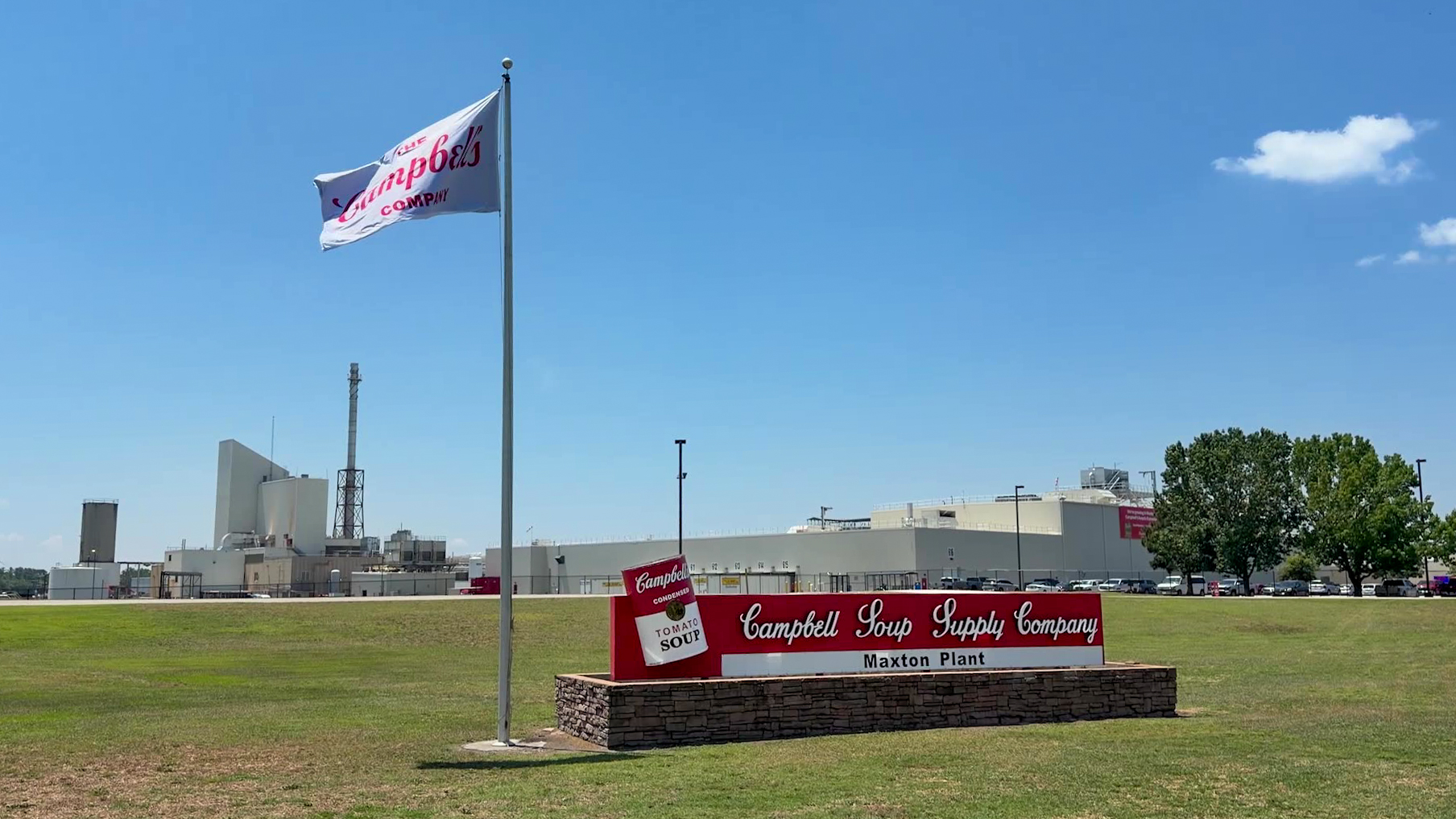
The Maxton facility, which opened in 1979, employs over 1,100 employees.
“The facility added a new aseptic processing line to increase capacity, improve product consistency, and support future growth. The aseptic technology is an advanced food production process that allows products to remain shelf-stable while ensuring quality, freshness and safety,” added Green.
The plant produces a range of the company’s brands, including Swanson, Pacific Foods, Campbell’s, Campbell’s Chunky, Campbell’s Homestyle and SpaghettiO’s.
“Additional technology and equipment will allow Campbell's new flexibility to process ingredients in different solid states, meaning the facility will have what it needs to handle ingredients no matter what form they come in. This ensures consistent and controlled production,” shared Director of Construction Operations Colton Koncak, CRB. “Also, the facility will employ state-of-the-art sterilization technologies, as well as a large-scale aseptic tank capable of holding roughly 27,000 cartons of product to enable Campbell's to achieve its desired production scale.”





Hello, loyal readers. I am writing to you as someone older and therefore wiser (okay, I’m actually writing this the day before my birthday, but you will receive your copy after I’ve already celebrated). I was reminded of how truly blessed I am t

Renaissance offers a broad range of massage services, from standard Swedish and deep tissue massages to signature massages that offer clients aromatherapy, a farmhouse-sourced “honey heel glaze” foot treatment and hot stone therapy. Photo by Style To
Nikole (pictured) and Lakota Shawn began selling their meat at farmers markets and in an online store in 2024. Now, they’ve opened their first brick-and-mortar location. Photo by GFBJ.The Shawn family believes in quality, locally sourced food, and th