

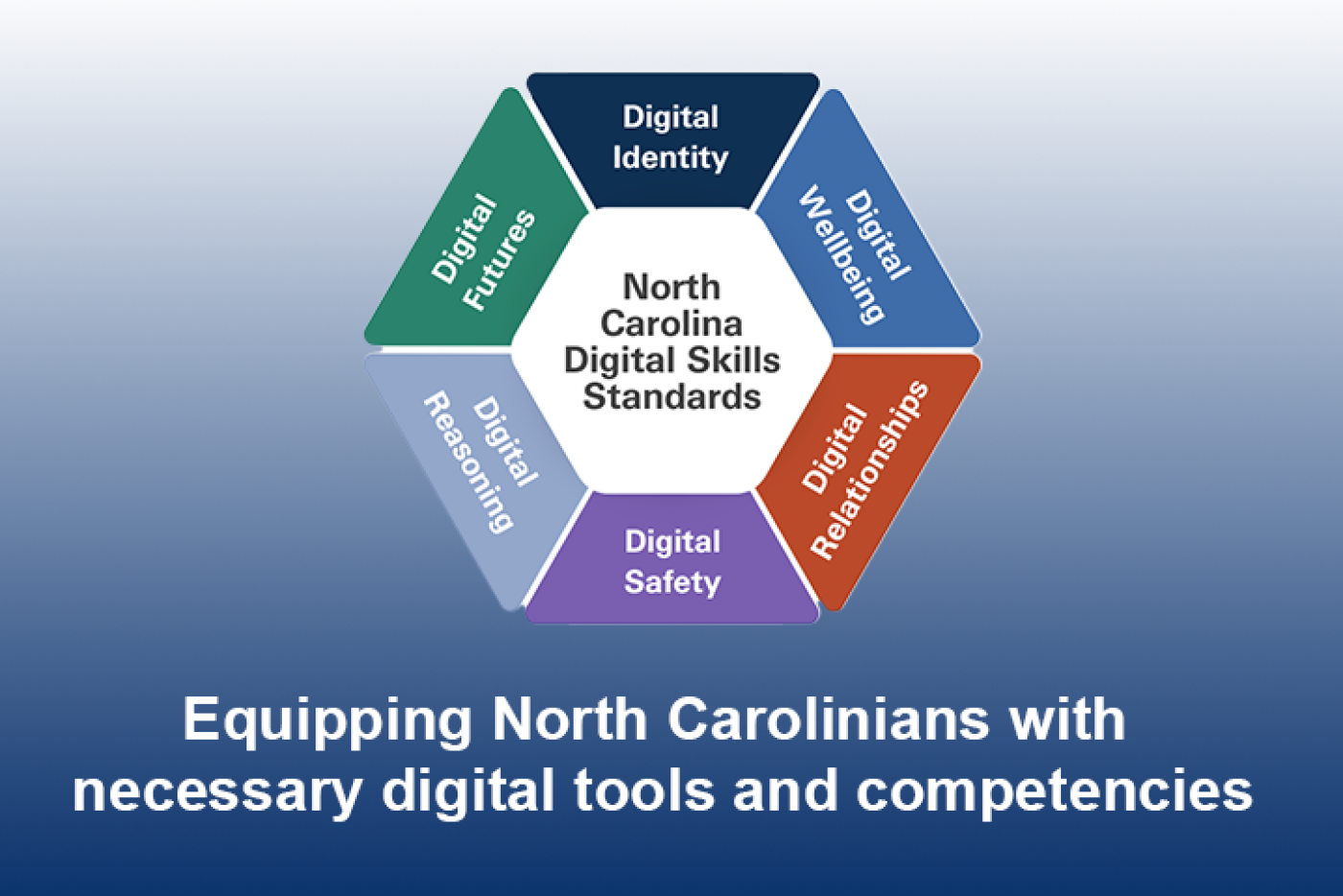
The N.C. Department of Information Technology’s (NCDIT) Division of Broadband and Digital Opportunity has announced the publication of the North Carolina Digital Skills Standards, a new framework designed to equip every North Carolinian with the digital tools and competencies necessary to thrive in today’s connected economy and society.
“The introduction of the North Carolina Digital Skills Standards marks a significant step toward closing the digital divide and empowering our residents with the skills they need to succeed in a rapidly evolving digital world,” said Annette Taylor, NCDIT deputy secretary for Broadband and Digital Opportunity in a press release. “Our work goes beyond access to high-speed internet—we’re ensuring every resident has the confidence and ability to use technology meaningfully.”
The Digital Skills Standards outline six core areas of essential knowledge and abilities for full participation in civic, economic, and social life:
These standards were developed in partnership with the Friday Institute for Educational Innovation at NC State University. Twenty-five other organizations and state agencies from across the state also contributed and provided feedback.
“This framework is designed to be an easy-to-use and helpful resource for practitioners,” said Emma Braaten, director of digital learning at the Friday Institute for Educational Innovation in a press release. “By combining state-level insights with on-the-ground expertise, we are ensuring that every North Carolinian has access to the digital skills needed to succeed in all facets of life.”
N.C. Extension will be the first organization in the state to pilot the standards in their digital literacy curriculum that is currently offered through its NC Digital Futures Program in 15 North Carolina counties.
“These standards are not just about technology—they’re about enhancing quality of life for all North Carolinians,” said Kenneth Sherin, Ph.D., N.C. Extension Community and Economic Development Program Manager in a press release. “They give people the skills and confidence to engage meaningfully in today’s digital society, especially in areas like telehealth that are helping connect our rural communities to resources across the state and beyond.”
Digital health access is a key component of the standards, ensuring all residents can navigate telehealth platforms, manage digital health records, and protect personal health information online. Learn more about how the application of these standards and skills will enhance digital health access.
Community and government organizations across North Carolina are already offering free or low-cost training opportunities to help residents build digital skills. NCDIT is also developing additional tools, resources and opportunities for collaboration to continue advancing this work. Organizations and residents are encouraged to explore the standards, share feedback to digitalopportunity@nc.gov and get involved in shaping North Carolina’s digital future.
For more information about the NCDIT Division of Broadband and Digital Opportunity, the Digital Skills Standards and Governor Stein’s plan to close the digital divide, please visit ncbroadband.gov.







The US Army Special Forces (SF), known as Green Berets because they are awarded a green beret to wear following the rigorous selection and training process, are specialized military units trained to conduct special operations. Photo provided by the G

Fuel to Serve will go “beyond the dining hall,” using food and shared meals as trusted entry points to link families with a broader network of resources. Photo courtesy of USAA.USAA and the Robert Irvine Foundation recently announced Fuel to Serve. T

Yes, those are decorations currently in my home. Yes, I may have spent more money than average for two oversized mums that are taking up way too much space on my porch, and yes, I may have stood my ground in a Lowe’s hardware store arguing with my hu