President Biden and US Department of Transportation officials announced Friday, Dec. 8, that North Carolina will receive a $1.09 billion discretionary federal grant to design and build the first segment of the S-Line, a high-performance passenger rail line to better connect North Carolina and Virginia, and rural and urban communities in North Carolina.
“This is great news and underscores our successful efforts to build a transportation system that works for all North Carolinians,” Governor Roy Cooper said in a press release. “The S-Line is a critical project that will provide fast, frequent and reliable service connecting North Carolina, Virginia and the Northeast. It extends our already popular passenger rail service between Charlotte and Raleigh, and provides people, especially those in underserved areas, a safe, convenient and inexpensive way to get where they’re going.”
“We are grateful to our federal partners who recognize the importance of transportation to our quality of life and getting people better access to jobs, health care and educational opportunities,” said NC Department of Transportation Secretary Joey Hopkins in a press release. “We envision a future with modern, efficient and sustainable passenger rail providing reliable and comfortable travel between North Carolina and the Northeast.”
The Federal Railroad Administration (FRA) grant awarded last week to the N.C. Department of Transportation will be used to complete the initial phase of the Raleigh to Richmond Innovating Rail Program, which includes construction on the S-Line rail corridor from Raleigh to Wake Forest.
The S-Line rail corridor is a freight line, owned by CSX, that connects Richmond and Raleigh on the federally-designated Southeast Corridor. Virginia has already acquired the line in their state from CSX, and North Carolina officials are working to finish a deal to purchase the corridor in North Carolina. Once the Raleigh to Richmond program is complete, the passenger rail service will save over an hour of travel time between the two cities. The service will also allow much more frequent and reliable train service and make the trip to Washington D.C. competitive with driving times.
The NCDOT will also receive from FRA $3.5 million in Corridor Identification and Development program grants, the Federal Railroad Administration announced Friday. Those seven grants will be used to begin the planning process for developing passenger services on rail corridors including a route between Fayetteville and Raleigh.
The proposed corridor would provide a new service connecting Fayetteville with Raleigh, NC,
with intermediate stops at Lillington and Fuquay-Varina, NC, using an existing alignment. The
corridor sponsor would enter Step 1 of the program to develop a scope, schedule and cost
estimate for preparing, completing or documenting its service development plan.
“Offering more passenger rail services along the S-Line will bring even greater benefits to North Carolina for decades to come,” said Jason Orthner, director of NCDOT’s Rail Division, in a press release. “Adding to our existing passenger rail service will save people more time and money, make travel more efficient and comfortable, and will help reduce congestion on our highways.”
Editor’s Note: This is a developing story.





Join us Sept. 29 for our third Power Breakfast of 2026 as business leaders share how they leverage decades of institutional wisdom. The Greater Fayetteville Business Journal invites you to join us for our third quarterly Power Breakfast, The Fam
Skyeton leadership have decided to look locally for a general contractor to head up major renovations for the 28,479-square-foot building they’ve selected as their new home. Fayetteville-based Critical Path Solutions LLC has been chosen as the primary contractor for bringing new life to the previous Black+Decker plant site.
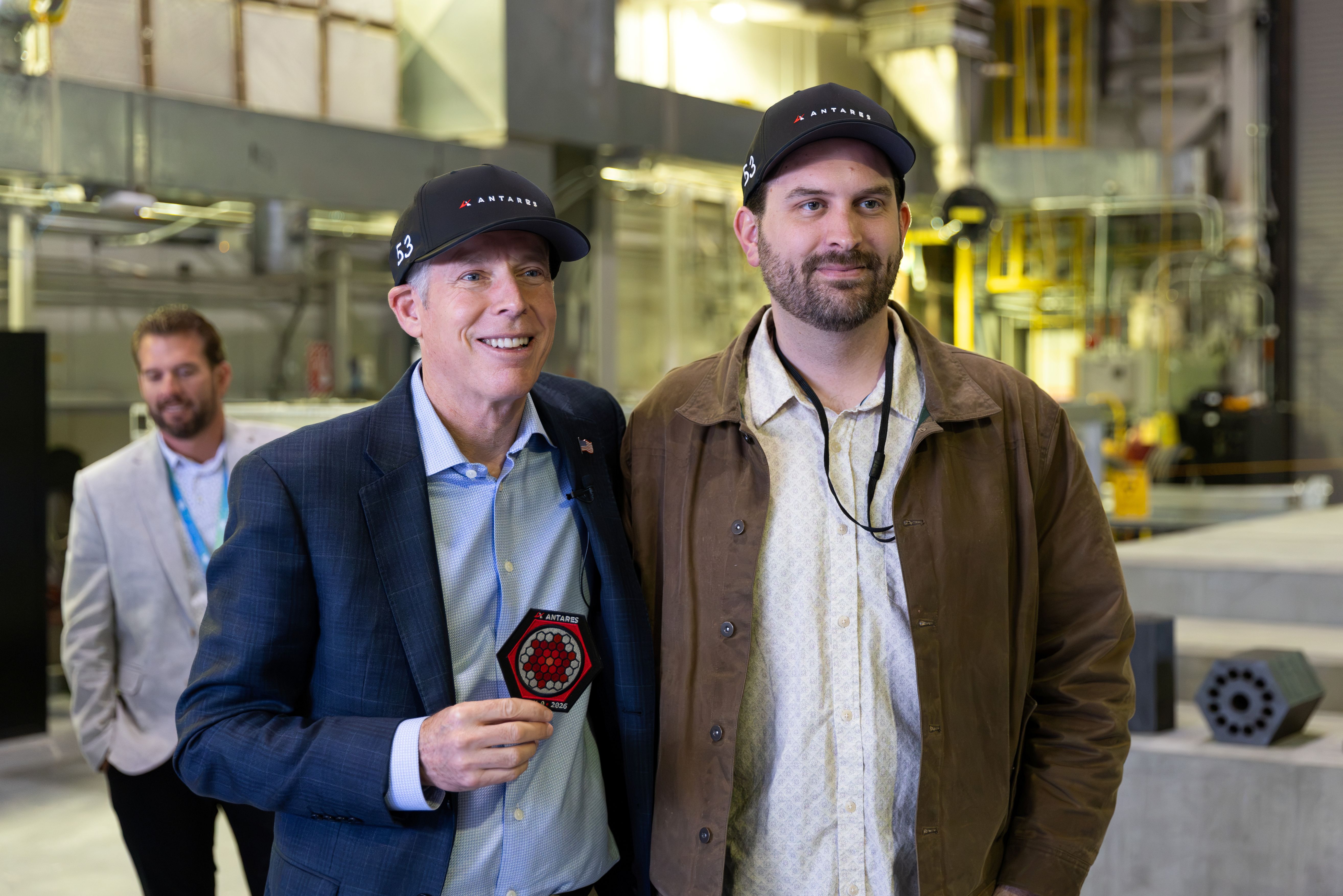
From left to right: US Secretary of Energy Chris Wright with Antares Co-founder and CEO Jordan Bramble. Photos courtesy of Antares Nuclear, Inc. Antares Nuclear, Inc. recently announced that it has been awarded an Other Transactions Authority ag