

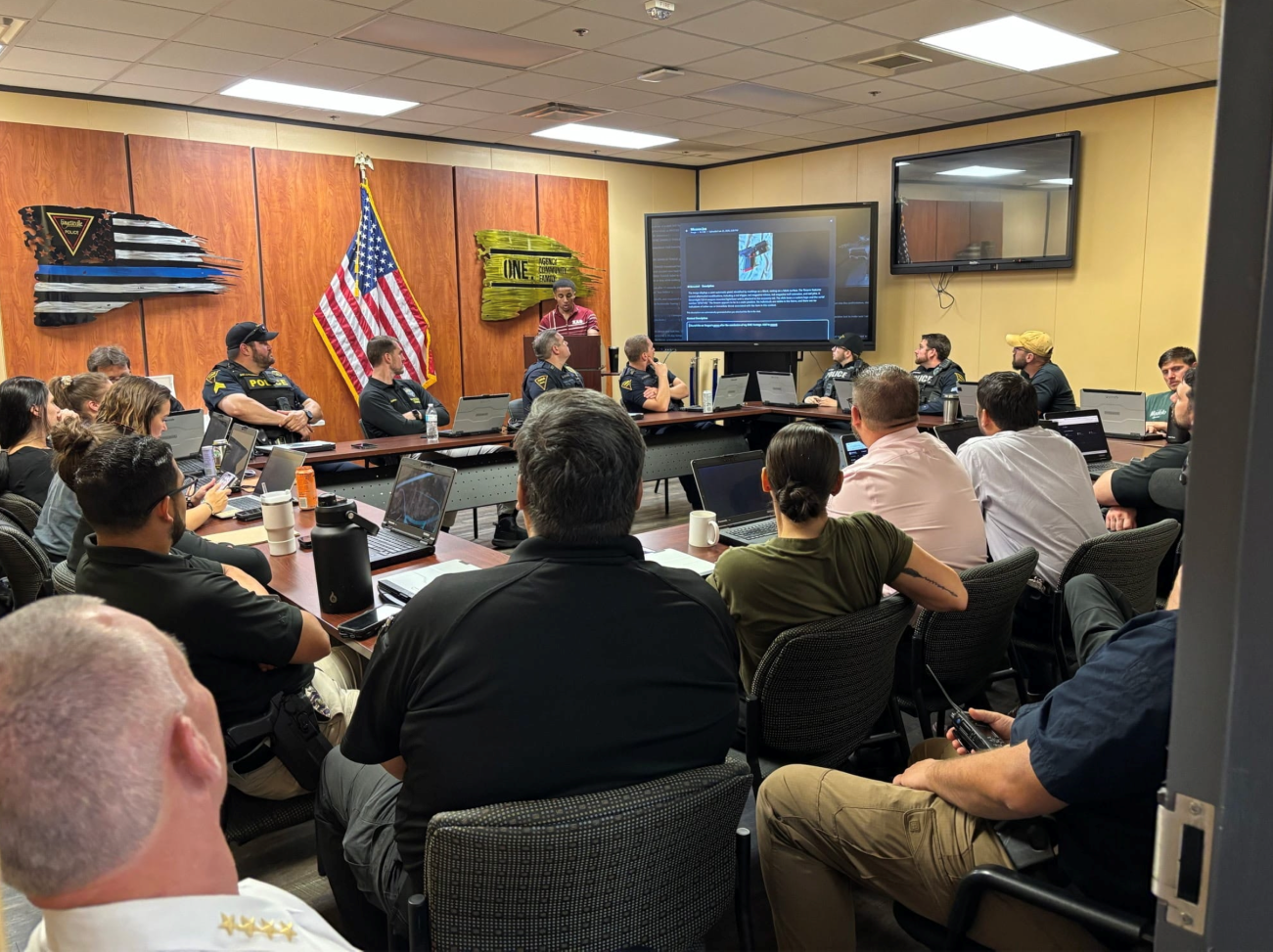
The Fayetteville Police Department has begun using Code Four, an AI-powered report-writing tool, to streamline the process of documenting incidents based on officers’ body-worn camera footage. The goal is not to replace officers’ judgment, but to help them spend less time at a keyboard and more time in the community.
“We’re always looking for ways to improve our workflows and efficiency, and nowadays, it’s 2026, so a lot of times that is turning to technology, and when we came across Code Four, we were interested in it…Code Four seemed to be the best fit for our agency, and we had them come here to do a demo, and then we did a little test phase, and the officers reacted very well to it,” shared Fayetteville Police Major Shawn Strepay. “The ones who were not involved in the test phase were like, ‘When can I get my hands on this?’ Which was great to hear because that test phase is always important to make sure that what we’re bringing in is a benefit to the agency.”
At its core, Code Four is a report-writing assistant. The software analyzes an officer’s body camera video and audio, then generates a narrative of what took place. That draft becomes a starting point for the officers to work off of.
“It assists in writing the report based on the officer’s body camera and the audio that the body camera picks up, but the officer is still writing the final report. So basically, in essence, it gets rid of the blank page. When an officer goes to write that report, they’re not starting with a blank slate. The software analyzes the video and the audio; it documents what happened in that video and then the officer is responsible for going through that line by line to ensure that it’s accurate,” added Strepay.
Reports are still reviewed and approved by the supervisor as well.
“This is a great tool to help the officer complete that report much faster. And instead of sitting in the jail parking lot, writing the report for an hour or hours, depending on the situation, they’re able to do that in a fraction of the time and get back out there into the neighborhoods and our business corridors where people actually want them. That way, they can actually work to mitigate crime,” added Strepay.
The test phase began earlier this year and lasted roughly six months, long enough for leadership to assess both how well the technology worked and how officers felt about using it day to day. Today, Code Four is available to all patrol officers and detectives, but its use is not mandatory.
Any conversation about AI in policing inevitably raises questions of privacy, security and accuracy.
“We’re dealing obviously with sensitive case files and things like that, so we can’t just use something like ChatGPT or Gemini or Claude AI,” explained Strepay.
All systems used by the department must meet Criminal Justice Information Services compliance, an FBI standard designed to ensure that law enforcement data is stored and processed securely. The Fayetteville Police Department worked alongside Code Four to help ensure the technology upheld these standards.
“We worked on our security… for around two to three months with Fayetteville as our sponsoring agency to get us CJIS secure over in the state of North Carolina,” shared Code Four Co-founder George Cheng.
“...the privacy and the accuracy are always going to be at the forefront of anything that we decide to do,” Strepay said. The intention is to give personnel access to powerful modern tools “but in a safe, secure and compliant manner.”
This partnership between Code Four and the Fayetteville Police Department was beneficial to both the police force and the AI startup.
“Since last year, we started from zero departments all the way now to 136 departments across the United States. A lot of our active clientele is in North Carolina as well,” shared Cheng.
Looking to the future, the Fayetteville Police Department is open to further AI adoption, but only under the same strict conditions.
“We’re always looking at things to make our jobs more efficient,” Strepay said.
If new tools appear that are both beneficial and “reasonable to use” within federal and departmental guidelines, the agency will consider them. For now, Code Four represents a significant step: a way to embrace AI in a controlled, accountable manner while keeping human officers firmly in charge of the final word on every report.






Hello, loyal readers. I am writing to you as someone older and therefore wiser (okay, I’m actually writing this the day before my birthday, but you will receive your copy after I’ve already celebrated). I was reminded of how truly blessed I am t

Renaissance offers a broad range of massage services, from standard Swedish and deep tissue massages to signature massages that offer clients aromatherapy, a farmhouse-sourced “honey heel glaze” foot treatment and hot stone therapy. Photo by Style To
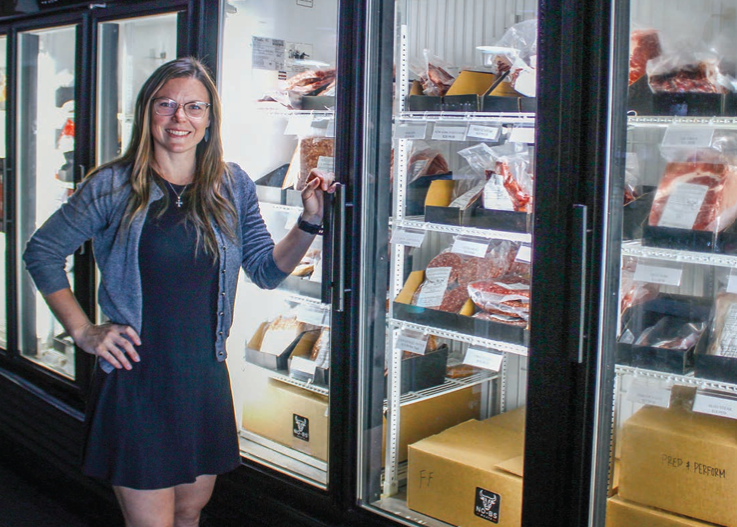
Nikole (pictured) and Lakota Shawn began selling their meat at farmers markets and in an online store in 2024. Now, they’ve opened their first brick-and-mortar location. Photo by GFBJ.The Shawn family believes in quality, locally sourced food, and th